Stowe Land Trust's Tom Rogers shared his guest perspective with the Stowe Reporter about the shared future of this valley.
There’s a moment just before the trees break open on the summit of Stowe Pinnacle when the whole valley begins to reveal itself. I’ve come to know that moment well, pointing out landmarks like the Waterbury Reservoir, Grandview Barn and Mt. Elmore to my daughters, or enjoying the sunrise on Mt. Mansfield during a morning run with the dog.
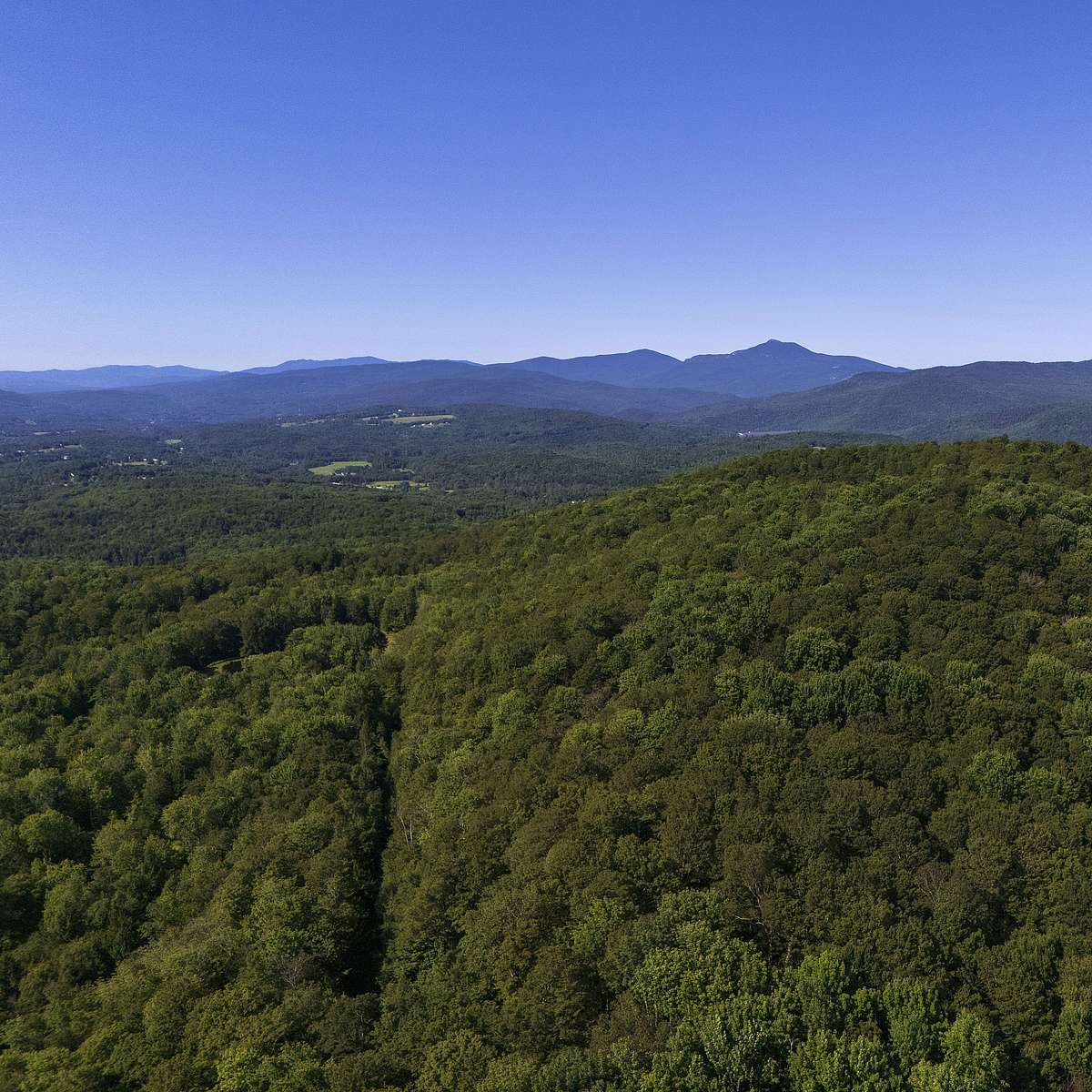
From that vantage, something becomes immediately clear: you can’t see town lines. There’s no visible boundary between Waterbury, Stowe and Morristown. What you see instead is one valley, framed by twin mountain ranges — an uninterrupted expanse of forests, waters and communities.
For nearly four decades, Stowe Land Trust has worked to protect the landscapes that define this place. The mountains that shape our horizon, the farms that grow our food, the trails that draw us outside, the forests where moose move quietly and birds fill the canopy with sound.
These are not abstractions. They are the foundation of our quality of life and are the core of what makes this valley home.
At the same time, pressures on this valley are intensifying. Rising demand for land and incremental subdivision can reshape a landscape before we fully realize what’s happening.
The systems we protect, from wildlife corridors to waterways and trails, do not follow municipal boundaries. Moose, deer and birds move freely across the Shutesville Hill wildlife corridor between Stowe and Waterbury. A paddler accessing the reservoir from Cotton Brook spends most of their time canoeing in Waterbury, while backcountry skiers in Sterling Valley cross back and forth between Stowe and Morristown without noticing.
In other words, the ecological and human systems that define this valley are interconnected and always have been.
For years, our work has quietly reflected that reality. Stowe Land Trust has already completed five conservation projects in Morristown and one in Waterbury.
And like any organization rooted in a living, changing place, we continue to evolve.
A recent example of this evolution is the Muddy Moose project in Morristown. More than 150 acres of forest and riverfront along the Lamoille River are being conserved and opened to the public, including a well-established network of hiking and Nordic ski trails, a scenic gorge with cascading waterfalls and sweeping views across a landscape rich with wildlife.
At the same time, our partners at Downstreet Community Housing & Development are converting eight vacation rental homes adjacent to the Muddy Moose property into permanent housing for full-time residents. The project ties together conservation, housing, recreation and flood resilience in a way that would have been difficult to imagine a generation ago. It offers a glimpse of what conservation can look like when it evolves alongside the needs of a community.
What is changing is not our mission but the opportunity to respond to growing interest from landowners across the valley who want to collaborate on conservation projects that protect the whole landscape and enhance quality of life. Landowners in every town care deeply about their land and municipalities are thinking more holistically about flood resilience, recreation and community character. And our board, staff and supporters already live throughout the valley, reflecting a broader sense of place.
Residents have voiced strong support for this valley-wide approach through forums, surveys and individual conversations. We are listening closely and using your input to guide how we grow and partner with neighbors.
Vermont’s conservation community is defined by collaboration. Each project is shaped by partnerships, the goals of willing landowners, and community priorities. We continue to work closely with partners like Vermont Land Trust, The Nature Conservancy and the Waterbury Lands Initiative as part of a collaborative approach to conservation.
This expanded work area is also not about stepping away from Stowe. It is in addition to the work we continue to do here, as we simultaneously commit to increasing the pace of conservation. In the last year alone, we completed four new conservation projects, including two in Stowe.
At its core, this work is about protecting what makes this place special for everyone who visits or lives here: working lands that support agriculture and forestry, trail networks that connect people to nature, forests and floodplains that reduce flood risk, and scenic landscapes that define our identity and economy.
From the top of Pinnacle, that future feels both expansive and interconnected. The view reminds us that we are part of something larger than any one town. A shared landscape, a shared community and a shared responsibility.
Because ultimately, conservation is not about drawing lines on a map; it is about shaping a future where this valley remains a place we cherish and protect.