History
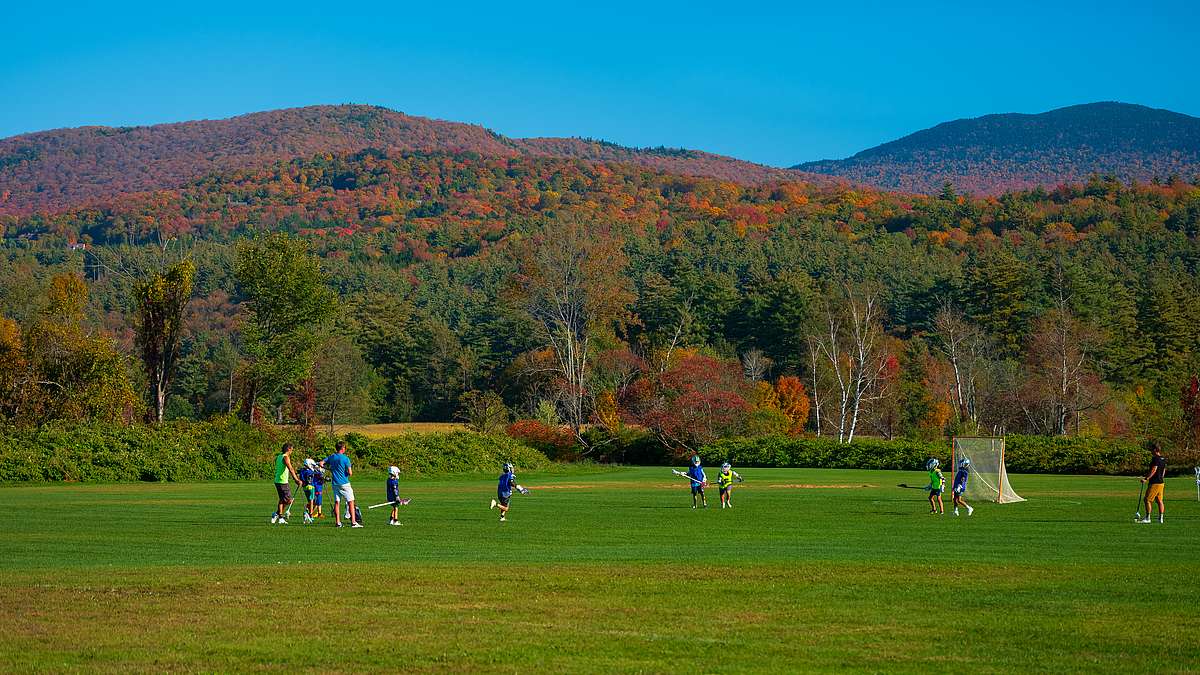
Mayo Farm is a 235-acre parcel of land in the heart of Stowe, consisting of recreational and agricultural land. It is currently used by visitors and residents alike for sporting events, festivals, access to the Stowe Rec Path and the Quiet Path, and other year-round activities.
In 1989, the Stowe community voted to protect Mayo Farm from development under the guidance of Stowe Land Trust, authorizing the purchase of Mayo Farm by the Town of Stowe for the primary purposes of agricultural and public recreational use. In 2003, the voters approved a 25-year conservation easement for the parcel. Stowe Land Trust holds the conservation rights and development restrictions conveyed by the easement and has a legal obligation to enforce those rights through 2028 when the easement expires. Of note, it is very unusual to have a conservation easement with an expiration; almost all conservation easements are perpetual.
The Mayo Farm Management Plan adopted by the Town of Stowe in 2013 provides additional background and rationale for the conservation easement.
Map of Allowable Activities | Satellite Map
Context
With the current conservation easement expiring in 2028, the parcel is once again being considered for development. The acute shortage of housing for long-term residents in Stowe, and across Vermont, is a significant area of focus for the Stowe Selectboard, the Housing Task Force, and the community. Some have suggested Mayo Farm as a potential solution.
The Future of Mayo Farm
The Conservation Easement automatically renews on each 25-year anniversary date (August 12, 2028) unless the residents of Stowe vote otherwise at the annual Town Meeting prior (March 2028). Based on legal opinion provided to Stowe Land Trust by Elizabeth McDermott, Esq. on February 18, 2025, there are essentially 4 options for consideration. Voters can:
- Do nothing and allow the Conservation Easement to renew for another 25-year period as is.
- Unilaterally terminate the Conservation Easement and not replace it. The town would still be held to the terms of the original deed restriction from 1989 stating the land is to be used “primarily” for agriculture, open space and recreation, but would be left to defend those legal rights on its own without Stowe Land Trust as a partner.
- Unilaterally terminate the Conservation Easement and immediately adopt a replacement conservation easement on a more limited portion of the property. This would need to be a perpetual easement, as term easements are no longer allowed per IRS law.
- Amend the Conservation Easement, with any amendments subject to Stowe Land Trust’s approval. Stowe Land Trust has an obligation to uphold the conservation values that are central to its mission and, therefore, would consider proposed amendments that meet the needs and desires of the community, integrate a significant community benefit (i.e. a recreation center or workforce/affordable housing), and maintain the stated conservation values of Mayo Farm. Practically speaking, Stowe Land Trust cannot support any amendments that confer significant private benefit to an individual (for example, a luxury housing developer).
Mayo Farm and the Choices That Shape a Community
The documentarian Ken Burns once described the creation of America's system of conserved public lands as the ultimate act of democracy. For the first time in human history, the best lands were set aside not for kings or noblemen, but for everyone, and for all time.
In Stowe, few places embody that democratic ideal more clearly than Mayo Farm. As one resident put it at a recent community meeting, Mayo Farm is “Stowe’s Central Park.”
Now the community is being asked to exercise that democratic responsibility by considering the future of Mayo Farm as the conservation easement approaches renewal. The question matters because Mayo Farm is one of the community’s most cherished public spaces.
Mayo Farm is more than a piece of land. It is the heart of Stowe. Every year, tens of thousands of residents and visitors experience this remarkable property. They walk the Rec Path or the Quiet Path, let their dogs run at the dog park, watch their kids play soccer, gather for community events, or simply pause to take in the sight of cows grazing in open meadows beneath the mountain ridgelines.
It wasn't always this way. In the late 1980s, the property was slated for private development. Believing the land's agricultural and scenic values were too important to lose, local residents organized to protect it. In 1989, Mayo Farm was purchased by the newly formed land trust and transferred to town ownership.
But after a decade, the community decided that the existing protections were not enough. Each year brought new proposals and debates over whether developing Mayo Farm could help meet changing community needs.
In response, Stowe voters chose to place additional protections on the land through a conservation easement held by Stowe Land Trust. In doing so, they embraced a simple principle: some places are so important to a community that their future should be guided by long-term public benefit rather than the pressures or priorities of any particular moment.
Tax rates can change. Zoning regulations can be revised. Public policies can evolve. But once open land is developed, the opportunity to preserve it is gone forever.
At the same time, they recognized that no generation can fully anticipate the needs of those that follow. Rather than impose a permanent answer, they chose a 25-year conservation easement, providing strong protection for the property while ensuring that future residents would have the opportunity to revisit the decision.
Now as we approach that twenty-five-year anniversary, the question is not what past generations decided, but how today's community wishes to use the opportunity they preserved.
That opportunity was intentionally designed to leave the future in the hands of a new generation. Nothing requires Mayo Farm to change. The easement itself establishes a community-led process for considering the property's future, and if the community determines that the existing protections should remain in place, the easement automatically renews.
The conversations ahead belong to the people of Stowe.
Stowe Land Trust's role is different. We will serve as a source of information, a voice for conservation, and a steward of the values that inspired previous generations to protect this land. We also recognize that Mayo Farm is public land, and that its future should be shaped through an open and thoughtful public process.
Ultimately, this conversation is about more than land use. It is about how we balance the needs of today with our responsibility to those who will inherit this community tomorrow.
For nearly four decades, Mayo Farm has embodied the values of conservation, agriculture, recreation, and community. The generations before us had the foresight to protect this extraordinary place. The question before us is how we will carry that vision forward.